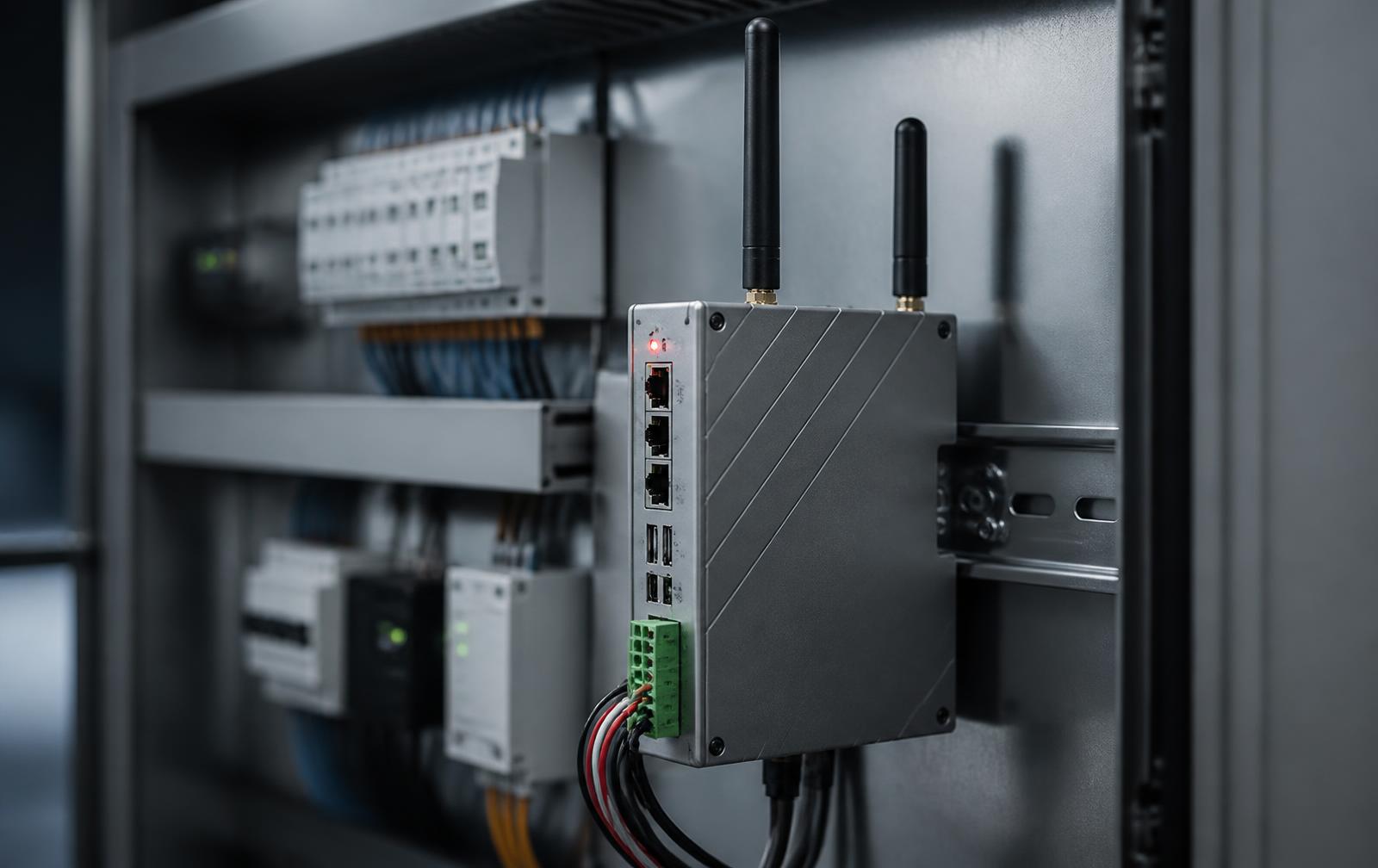

This guide looks at PLC and Modbus integration from an engineering and operations perspective: what data is required, how it is captured from real equipment, and how teams turn it into decisions that hold up on the shop floor, in the field and across a building portfolio.
Why this matters
Industrial operations already generate continuous machine, vehicle and utility data. The value is rarely lost at the sensor — it is lost between systems, where controllers, meters, telematics units and maintenance records never meet in a single decision layer. Once that layer exists, downtime, energy cost and service effort become measurable rather than anecdotal.
What to evaluate
- Data acquisition: protocols, edge hardware and compatibility with legacy equipment
- Deployment model: cloud, on-premise or hybrid, and where data must reside
- Analytics depth: alerting, baselining, benchmarking and anomaly detection
- Integration: APIs, ERP and CMMS connectivity, and white-label requirements
- Operational fit: who acts on an alert, and what the escalation path looks like
Connected operations succeed when every alert has an owner, a context and a next action — not when more data is collected.
Implementation approach
A workable rollout is phased. Start with an assessment of asset classes, protocols and network conditions. Run a scoped pilot on a representative group of assets to validate data quality and alert relevance. Integrate with the systems where work actually happens. Then scale site by site, reusing the same configuration, and keep tuning thresholds and models against real outcomes.
Summary
Treat industrial intelligence as an operating capability rather than a dashboard project. Get the data path right from asset to edge to cloud, keep the analytics explainable, and measure the programme by the decisions it changes.